
The +1.5 million HKD programmer
I had a coffee with HK's Mister Robot
Howdy people from the 852,
I’ve just ordered an Apple Vision Pro on Taobao…
In this edition of Better Read Paul:
Introduction: What’s going on since Keeta was launched in June 2023?
How to start a business in Japan?: An entrepreneur shared the 5 biggest headaches for non-Japanese founders.
My Entrepreneur Portrait: Angus Cheng is the mastermind behind a simple yet highly lucrative online service.
PS: Now, Better Read Paul has an Instagram page with extra content
PS2: Caroline Tronel, a friend of mine, is organising a networking event on the evening of February 28th, and I'll be there. For more details, you can join her WhatsApp community.
Last year, I predicted that the company KeeTa would not survive until mid-2024.
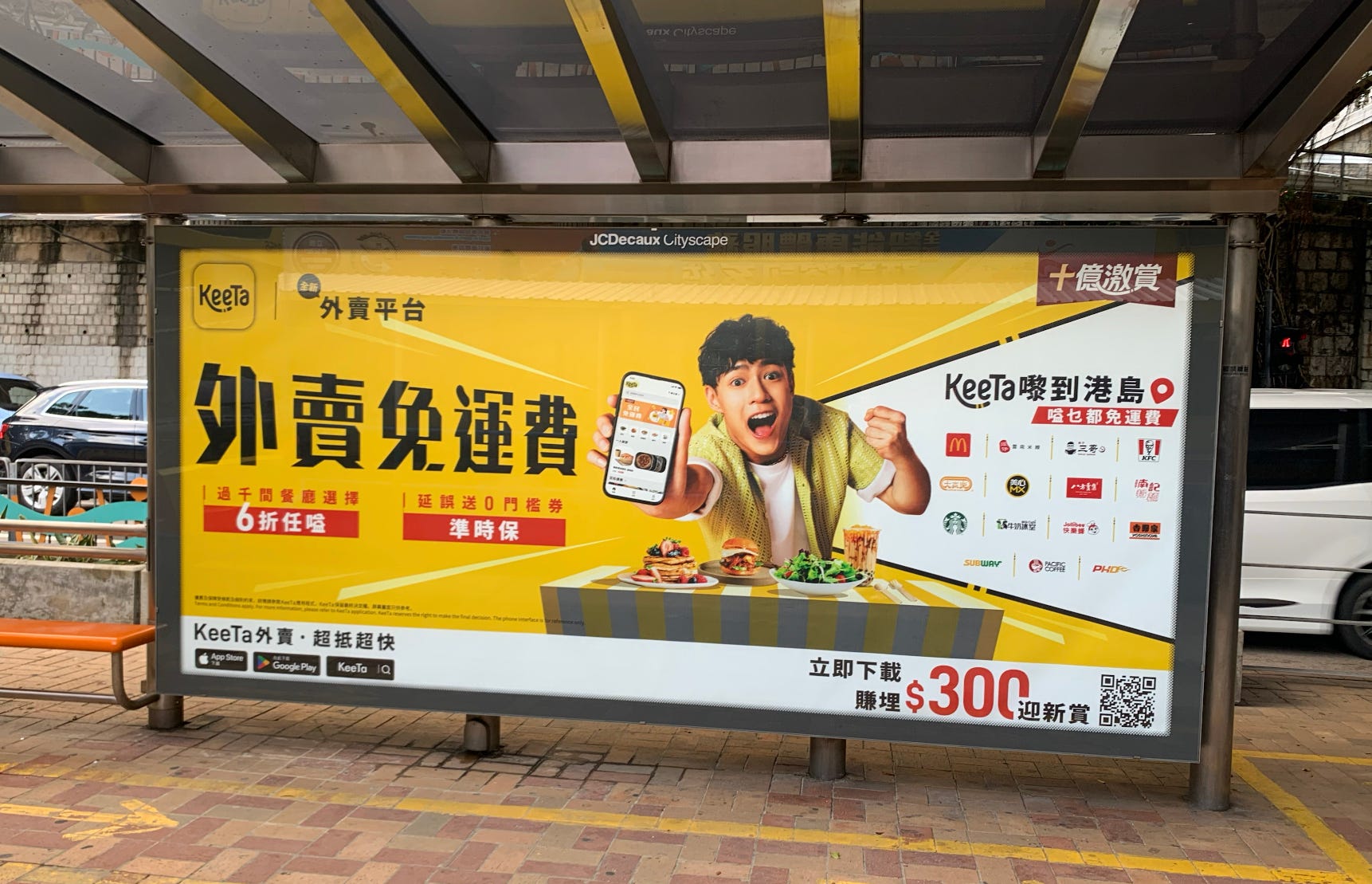
For the story, KeeTa — A local company — decided to jump headfirst into Hong Kong's competitive food delivery industry in June 2023.
Now, you might be thinking, "Paul, isn't that a suicide mission?" Well, you're not far off.
Only 2 companies “survive” and generate profits on this winner take-all-market: Foodpanda (About 70% of the local market) and Deliveroo (30%).
A true corporate Hunger Game (RIP Uber Eats) but Keeta is no ordinary contender.
The company got the backing of the Chinese giant Meituan and a sh*tload of money for marketing.
It’s simple, you can't go anywhere in Hong Kong without seeing Keeta plastered on billboards in the streets and MTR stations.
So what’s going on since the company was launched?
Well, according to Caixin, KeeTa has grabbed 1/3 of the market in 6 months and 1.3 million downloads. They surpassed Deliveroo by 3% in November.
So it seems I may end up being wrong…but not so sure.
KeeTa has adopted a familiar subsidy-heavy approach to attract both users and delivery staff, offering incentives such as free delivery and discounts.
However, this strategy has impacted the company's Average Order Value (AOV), which remains lower compared to its two competitors (Around 102 HKD VS 170 HKD).
And all of this doesn't say much about profitability as KeeTa is burning a lot of cash on promotions and discount to 'buy market share'.
However they claim to have 10,000 merchants and 30% monthly growth, which is quite impressive.
Anyway it seems to be a good start considering that they are not doing pick up order and grocery delivery for the moment.
Let's wait and see what unfolds by next June.
Thank you for reading me,
Paul
PS: Typically, I don't discuss AI here, but I must say that Sora, the new text-to-video AI toy from OpenAI, is game-changing. It's the first time I've seen such high-quality AI-generated videos that can last up to a minute. Hollywood is dead!

Back to Zhuhai for a day, and the new visa-free policy made the travel experience a breeze. Instead of the previous 5-hour journey through Macau to obtain a 3-day visa, I was able to reach Zhuhai in just 2 hours, directly through the HZM Bridge.
I stumbled upon an absolute gem there: Beishan. This area is a hidden treasure, with its charming small streets lined with cozy cafes, delightful restaurants, serene temples, and captivating vintage shops. Give it a try!
How to start a business in Japan?

As a nerd fascinated by the Japanese culture, I‘ve always wondered how creating a business feel there. So I asked Beau Becker — the founder of Reiwa Pharmaceuticals who’s developing Japan's first anti-flush products.
Beau spent the first 5 years of his career working for traditional Japanese machinery companies before launching his startup in Tokyo in 2019. I asked him the 5 biggest headaches for non-Japanese founders:
The super-conservative nature of Japan’s business landscape can lead to some amazing opportunities for startups to challenge the status quo and make it big. Local governments are even aggressively luring entrepreneurs to Japan with promises of support and grants.
After 5 years of running startups in Japan, I can tell you that these are mostly empty promises. I have met hundreds of founders and heard the same headaches popping up time and time again.
Until the Japanese government takes a seriously hard look at the laws curtailing non-citizen entrepreneurs, I would think twice about setting up your company in Japan.
Here are 5 biggest headaches you will encounter:
Immigration
Despite the messages from Japanese local governments begging entrepreneurs to set up shop in Japan, Immigration will be your biggest obstacle. To own a business and pay yourself you need to have a Business Manager visa. The immigration bureau is determined to make receiving this visa as difficult as possible. The rules are unclear and constantly changing, with the worst part being that the final say is up to a subjective decision by the officer reviewing your case. After all your hard work, if you finally do get the BM visa, it will only be for a 1-year visa.
Bank Accounts
For corporate accounts, banks almost always require you to have a Business Manager visa to open an account, but many will not even work with you until you have a Permanent Residence. Even when you do have the right documents, you will often be rejected without any reason provided. Recently, netbanks have made corporate accounts more accessible, but many businesses still refuse to work with a netbank account. So eventually you will have to open a traditional account anyway. I personally went to 15 banks and credit unions before being able to open an account and have heard the same story from so many other founders.
Renting an Office / Apartment
Renting an office is expensive, but at least you will be able to do it. As long as your Japanese company is willing to pay all the ridiculous fees, most offices will rent to you. Trying to rent a personal apartment in Japan will be a much harder task. Many properties actively advertise that non-citizens are not permitted. The ones that don’t advertise it will still reject you and refuse to give a reason. They even require you to buy special non-citizen insurance and guarantees which just add on to your rent. I once applied for 30 apartments in Tokyo before being offered to move in.
Fundraising
Get ready to be rejected. The number of Japanese VC that have invested in non-citizen owned businesses can be counted on one hand. Seriously, we have a list, and it is short. VC are so conservative that my company was able to get a bank loan before equity investment. What is the point of begging startups to come to Japan, when there is little to no chance that they can get the funding they need. The good news is that non-Japanese VC are willing to invest in Japanese companies, and you may be better off dealing with them.
Rakuten
Japan’s largest online e-commerce platform prohibits non-citizen owned companies from selling on their platform until they have at least a 3-year BM visa. The immigration bureau will only give you such a visa after 3-years of business, so the whole thing is a giant Catch 22. Hope your start-up can make it that long without access to the largest selling platform in Japan. You’ll be limited to Amazon and any e-commerce you set up yourself. This one is really sick, because even though the government has approved your business to operate, Rakuten has made a ridiculous corporate policy to stop startups competing.
Do you have an opinion on an interesting topic to share? Ping me to be featured here!
Seen in HK…
A Chinese New Year in Hong Kong, this time in 1935. Another year of the “Loong” (or “Dragon” you choose).

The new Kai Tak Stadium is 85% complete and expected to be finished by the end of the year. Maybe one day Messi will play there…

The Entrepreneur of the Week
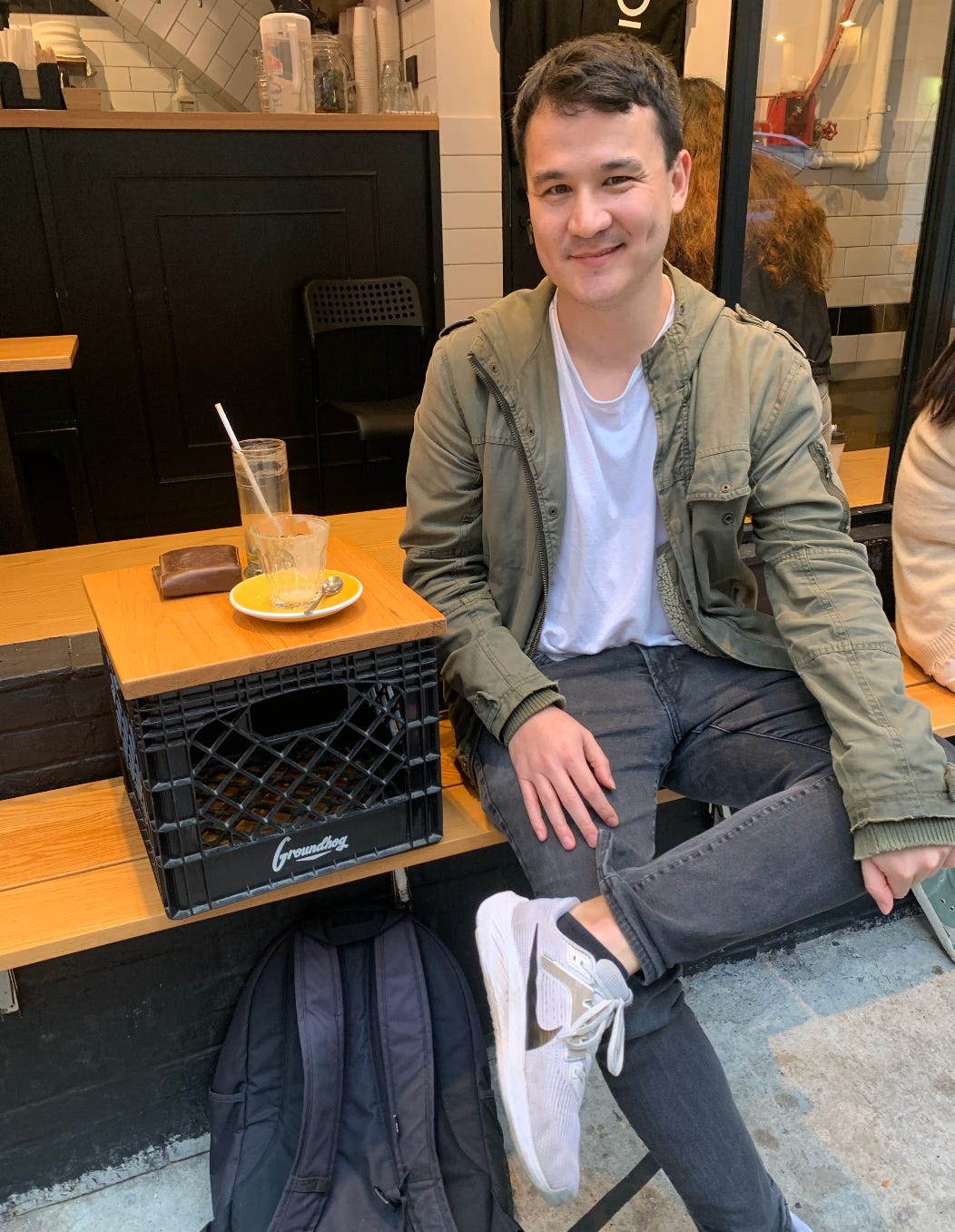
I learned about Angus Cheng through a friend who first described him as “a grumpy programmer who created a digital girlfriend app to rake in some cash”. Curiosity got the best of me, so I invited this HK version of Mister Robot for a coffee.
Here his story:
I was born on Christmas Day 1987 in London. A few years after that my parents moved to Hong Kong. My Mum is Australian and my Dad is Chinese. in 2004 I moved to Australia for my last two years of high school, after that I studied Computer Science and worked in Sydney for a few years. In 2012, I made the decision to return to Hong Kong and make it my home again.
Now, let's rewind to 2010 when I was just 23 years old. That's when I created my very first video game called "Get Rich or Die Gaming." It was a point and click adventure game, where you play a 14-year-old kid who has been kicked out of his house for gaming too much. To make money you become a drug dealer.
To my surprise, the game ended up generating 100,000 USD over a span of five years, and that's when it hit me: With a great digital concept, I could potentially amass millions.
Fast forward to 2014, when I decided to delve into the world of mobile apps and came up with "Girlfriend Plus" – a smartphone app that let users have conversations with virtual women.
You could interact with over 20 ladies, but be warned, some of them meet rather unfortunate endings. For example, one of them tragically died under a pile of elephant sh*t while working at the zoo. (If you think that’s stupid, well you right but I had to find ways to stop the conversation since the game couldn’t go forever)
Despite the quirkiness, the app brought in a total of USD 250,000 over ten years.
Now, here's where things took an unexpected turn.
I was still working full time and got invited for an interview with Groupon in San Francisco.
But, alas, the recruiters canceled the interview while I was on the plane because they discovered "Girlfriend Plus" on my CV and cited it as the reason.
At this point I had made "Girlfriend Plus" and the male equivalent "Boyfriend Plus" (But this version was way less successful..). Anyway I replaced "Girlfriend Plus" with "Boyfriend Plus" on my resume.
Finally, in November 2020, I had enough of my corporate gig as a backend developer for a cryptocurrency exchange.
I decided to call it quits and pursue my own business path.
That's when I started my one-person gig with a service called "Bank Statement Converter." — An online service to convert PDF-formatted bank and card statements into Excel files.
You see, I owned a limited liability company called Dragon King Creation Limited to manage my app sales revenue. But dealing with bank statements, credit card statements, and all the paperwork for my accountant was a hassle.
Turns out, there's quite a demand for it, especially overseas where banks often provide statements exclusively in PDF format.
I shared the idea to a friend, and together we started building the app.
Surprisingly, it didn't take us long to develop it. We started working on April 4, 2021, and by April 17, we acquired our first user through a Google search ad campaign.
However, we encountered an issue with the lack of repeat purchases. To address this, I decided to switch to a 200HKD-per-quarter subscription model, which resulted in an increase in conversion rates.
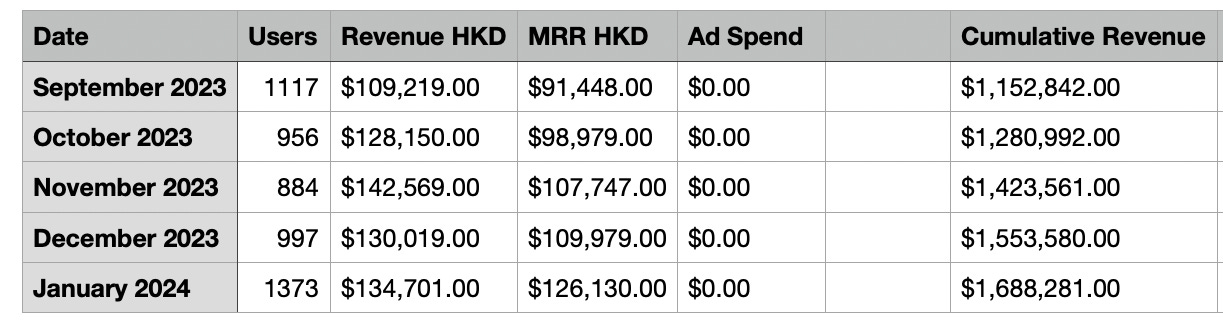
On February 25, 2022, we had reached 10.000HKD in monthly recurring revenue (MRR).
Today Bank Statement Converter generates over 120.000HKD per month for +1300 users, resulting in a total revenue of over 1.5 million HKD since its launch.
Looking ahead, I am considering developing a new AI-powered girlfriend app that might give Tinder a run for its money!
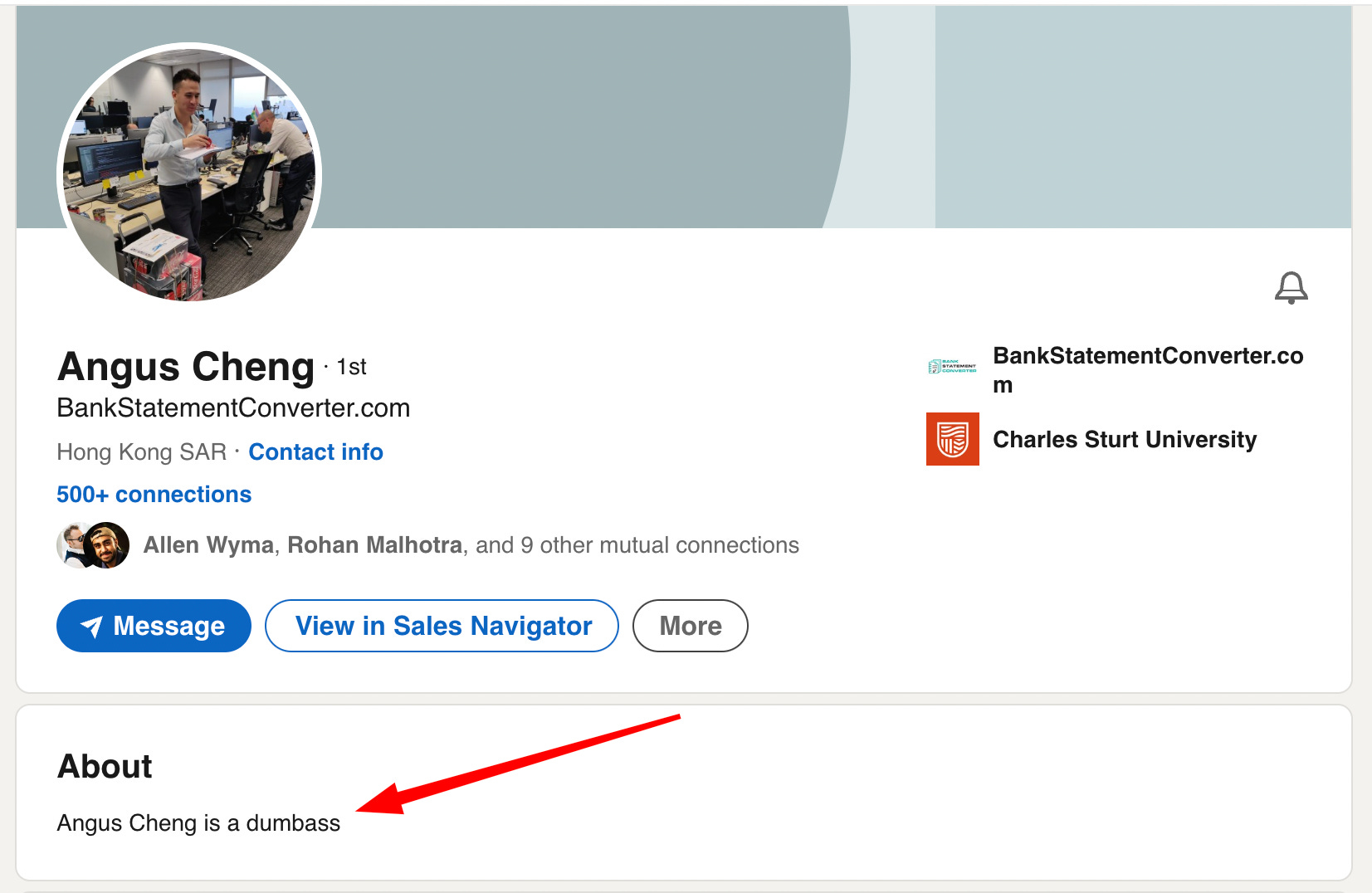
If you want to meet Angus, you can find him on Linkedin
If you have not done it yet:
Read my thoughts on Linkedin (+5900 followers)
Be featured in this newsletter!
Let me know your thought about this newsletter:
Until next Wednesday!
Paul from Hong Kong,