
The no-code SaaS Maker
I’ve interviewed the founder of the no-code platform Momen.
Howdy people from the 852,
Welcome to this week's Better Read Paul,
So, about a year ago, I had this bright idea: Why not starting a good old WhatsApp group for business founders and any other curious nerds out there?
Fast forward 365 days, and that group has grown to 300 folks chatting about everything from business stuff and tech to puppies and Siu Mai.
So yeah, I’ve earned this self-brag.
So, on my Christmas menu this week:
I’m doing things a bit different this time with a full section to show you how I use AI in marketing to create logos, brand guidelines, social media posts, packaging, etc., for less than $10.
Trying to give as much value as possible here.
Next, the Entrepreneur Spotlight returns with Yaokai, a Chinese guy who moved to Italy and later studied in the U.S. He’s the founder of the no-code platform Momen,
We’re a week into December, and here’s some great news: I haven’t heard Mariah Carey yet.
Thanks for reading my stuff guy, you are now exactly 1100 readers.
PS: You can find me on LinkedIn or in my WhatsApp group about business
Paul
Vintage Hong Kong

Tai Po in the ‘80s. Notice the buildings in the background?
How to do your Marketing with AI (for less than 10$)
Alright, I don’t have much room here, but I do really want to show you how to use AI to build a full marketing support for your business: branding guidelines, social media posts, packaging, etc…
Everything can be built in about 30 minutes for less than 10 USD. Yep, super cheap.
This is especially for those of you who are running a small gig and don’t have much time, knowledge, or budget to build a brand around their products or services.
This is also the story of how I spent the last 6 months boosting my marketing skills.
So why now?
Well, something happened 2 weeks ago: Google released the new version of its AI visual tool, Nano Banana Pro, and it’s definitely a step forward toward full realism.
But let’s stop talking and let me show you how I create a complete new brand, prompts included.
First, let’s grab a one‑month Adobe Cloud subscription for 70 HKD on Kinguin (Kinguin isn’t sponsoring this newsletter, I just recommend it).
After that, I hop onto Nano Banana Pro via Adobe Firefly, Adobe’s AI platform (Included with your Cloud subscription). Ready to go.
Now let’s define my objective. For this example, let’s say I’m trying to do dropshipping and sell a pair of vintage‑style headphones I found on Taobao.
Since I don’t want to take an existing product, I’ll ask Nano Banana Pro to create one.
Prompt:
“Can you create headphones that look simple, designed with brown leather and a bit of purple and yellow? White background. The image is split into 4 pictures, each showing a different angle of the product.”
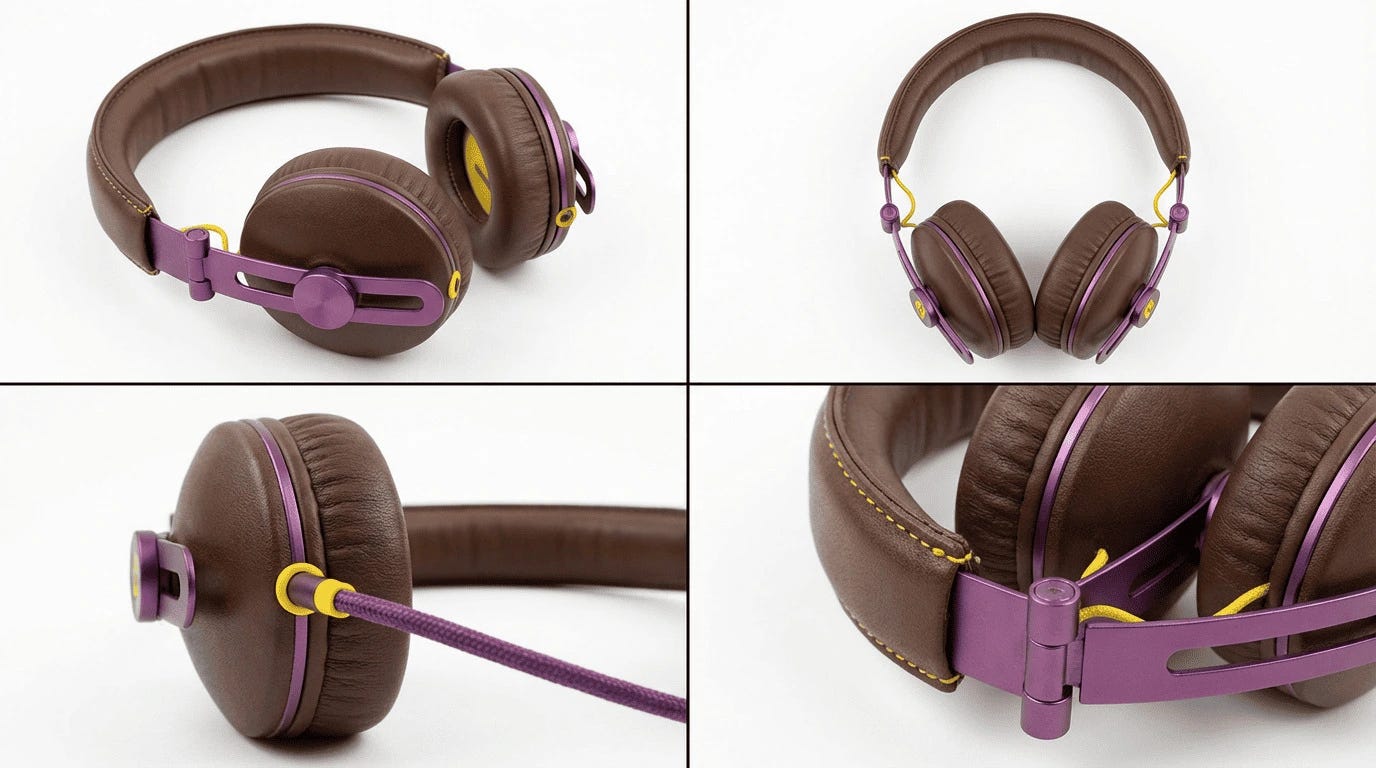
Hey good stuff right?
Next, let’s choose a brand name. I asked my favourite text/coding AI, Copilot (included in my Windows, but you can also get it on Mac), to give me a list of 10 brand names.
Prompt:
“Can you give me 10 ideas of brand names for a headphone brand that sells leather, vintage‑vibe headphones? Make it punchy and impactful.”
After reviewing the list, I decided to go with Analog (Yeah in one word…).
Okay, so we’ve got the brand and the product. Now let’s start building the marketing around this brand.
First, I need brand guidelines to define the font, logo, colors, and social media vibe for Analog.
Let’s start with the logo. Usually, I use my Pinterest account to find a logo style I like, then upload it into Nano Banana and replace the letters.
Prompt with uploaded logo photo from Pinterest.
“Can you change the letters in this logo to say ANALOG?”
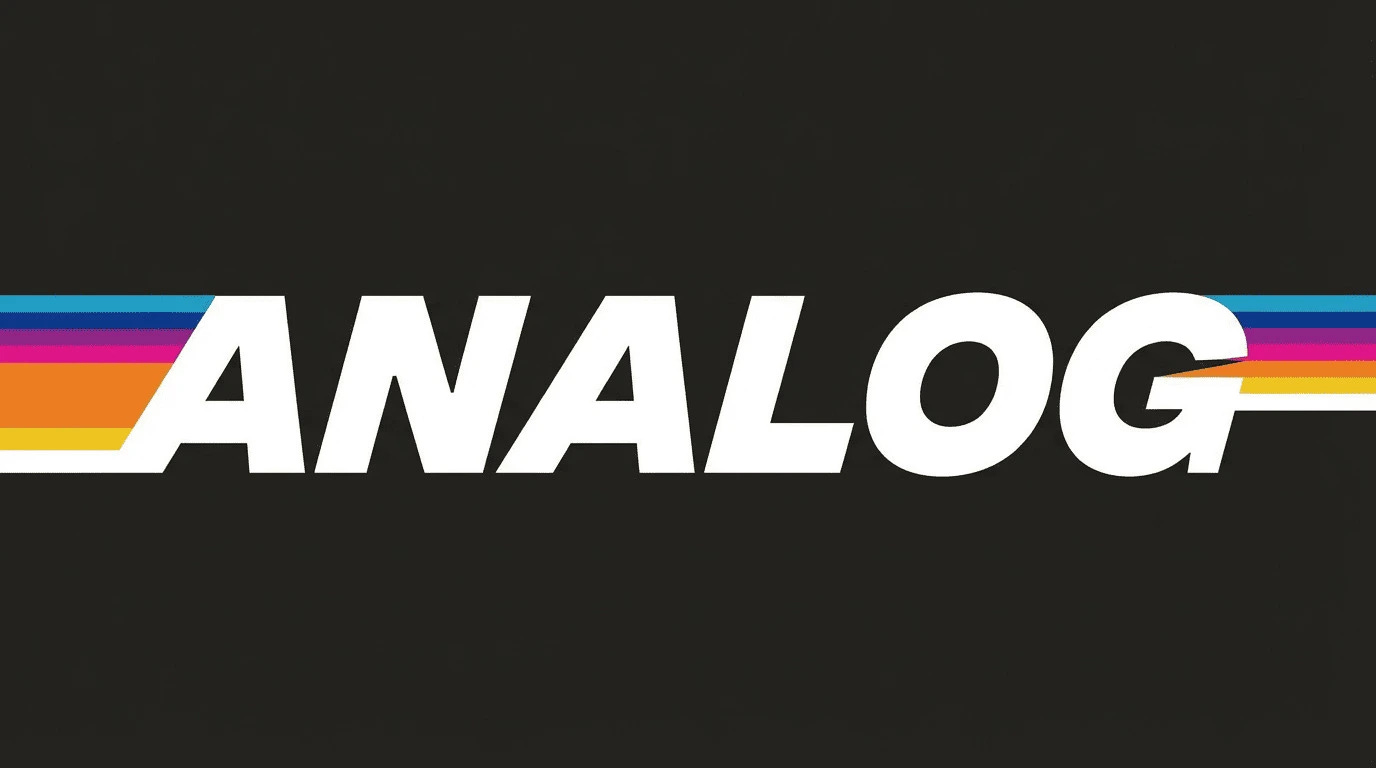
I’ve decided to go with a vintage style.
Now I’ve got the product, the brand name, and the logo. Time to build the marketing.
First, let’s create brand guidelines.
Prompt with uploaded logo + product images:
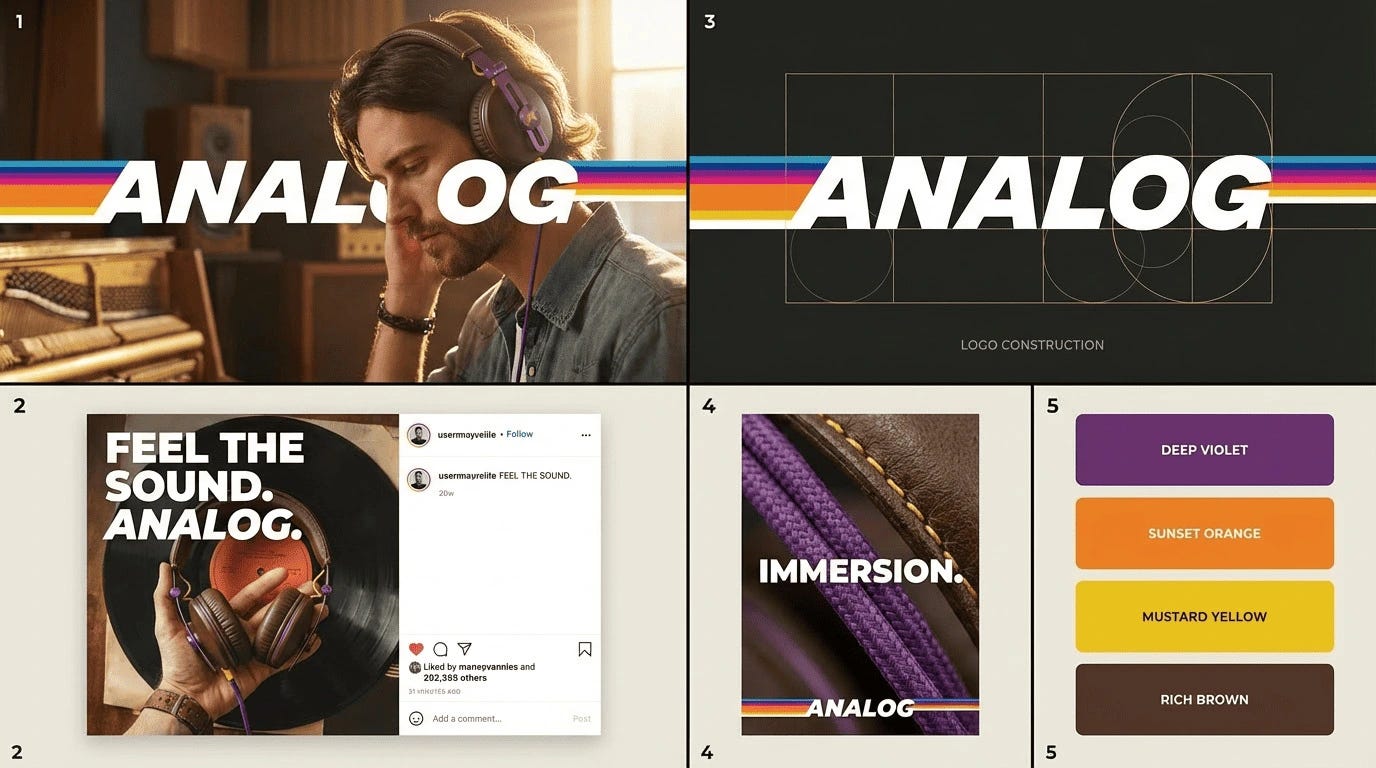
“A professional brand identity bento‑grid showcase for a brand named ‘ANALOG’ (headphones industry).
The image is split into a cohesive layout of rectangular cards featuring:
A dynamic key visual showing the product or service in action with a logo overlay.
A social media mockup post with bold typography and a thematic photo.
A minimalist logo construction grid diagram on a solid color background.
A vertical advertising poster featuring a close‑up macro texture related to the niche.
A brand color palette section with 4 matching swatches.
The design style, color scheme, and objects are strictly thematic and culturally relevant to the industry. High‑end graphic design, Behance trend, 8k, photorealistic mockups.”
And the result is pretty amazing.
Next, let’s create a mockup grid using these guidelines.
Prompt:
“Use the attached image as an aesthetic reference. Create 4 different headphone mockups in the same style, but placed in different environments and shown from different angles.”

Finally, let’s create the packaging for this product.
Prompt with uploaded picture
“Design a 3D package for this brand’s product. I’d like a square box with a white background.”
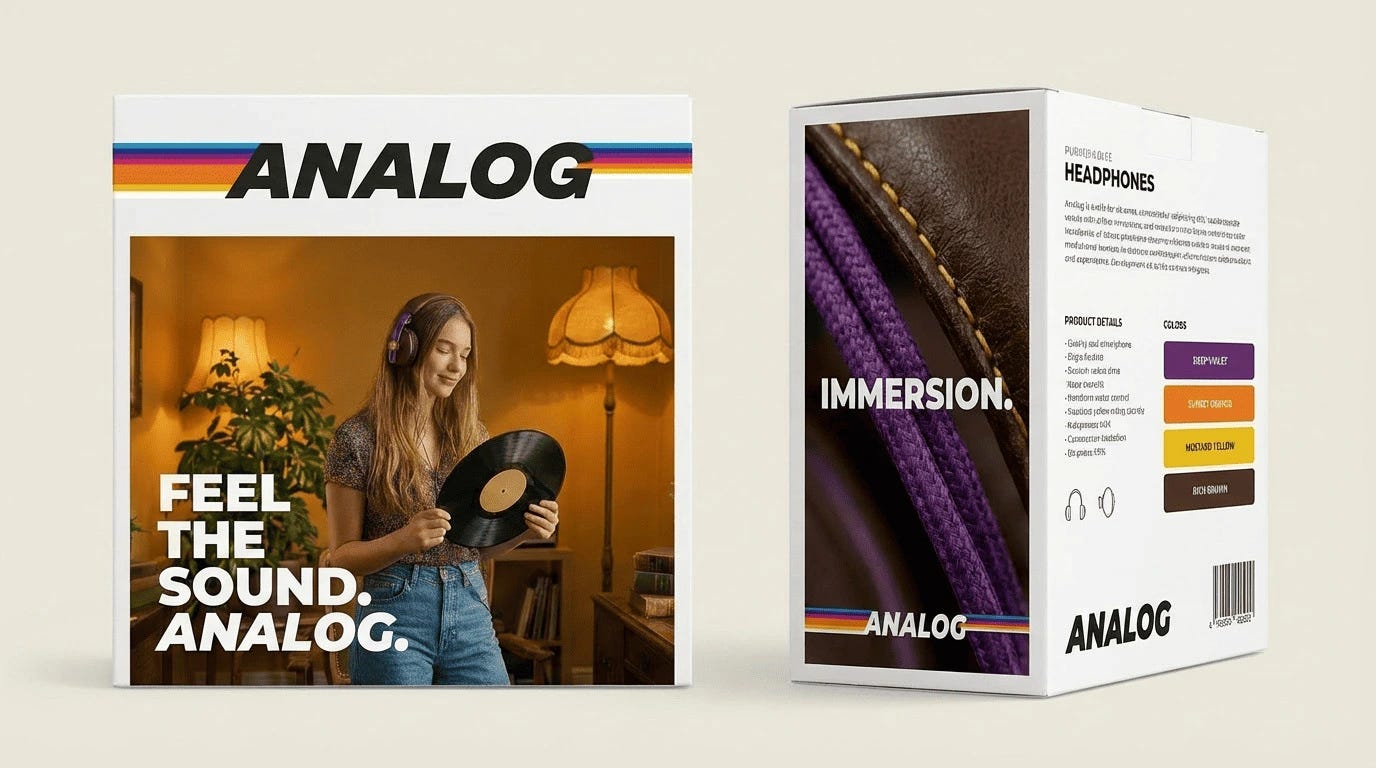
And now let’s get a 2D die‑cut version:
Prompt:
“Generate a 2D die‑cut version of this packaging.”
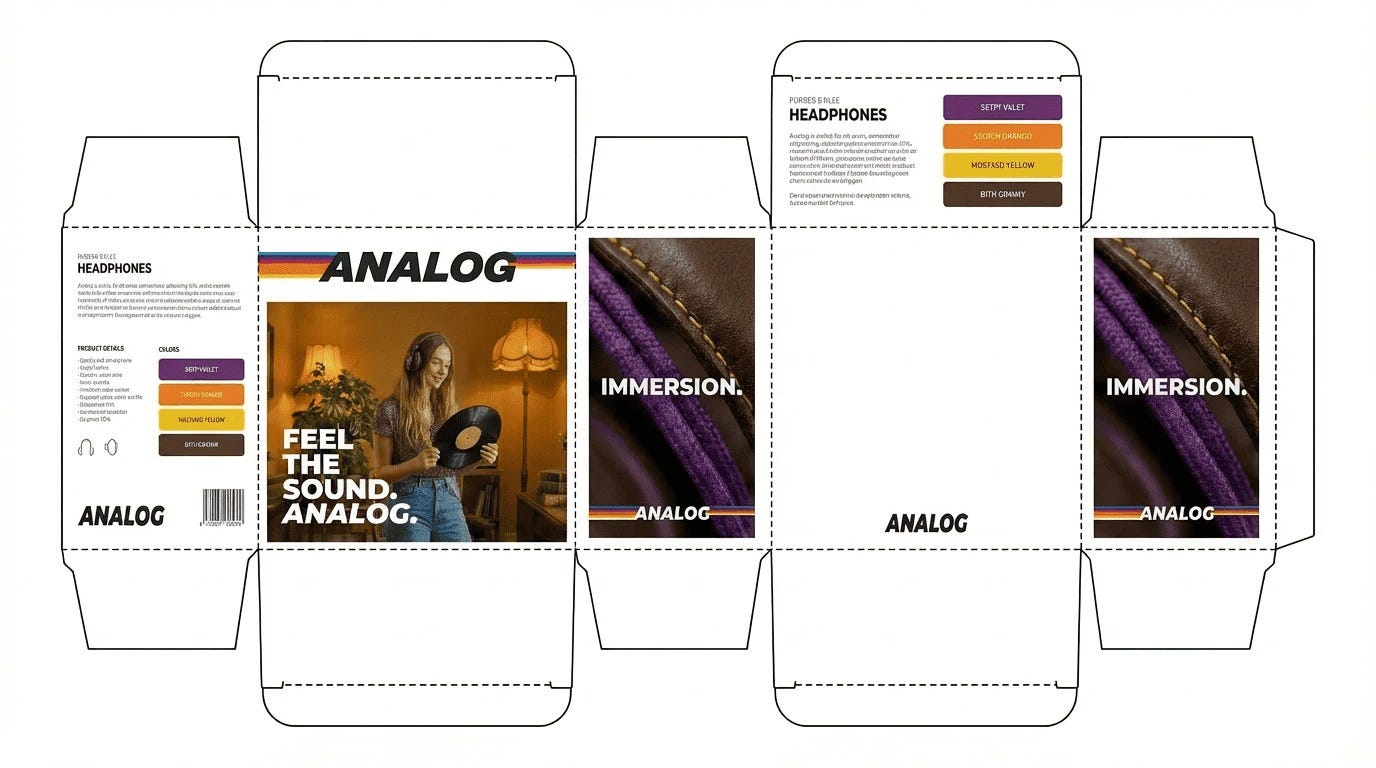
Here we go. In about 30 minutes, I created the whole branding for a non‑existent headphone using Nano Banana Pro for about 10 USD.
Of course, this is just the beginning, but you already have a marketing structure. Next steps can be done by freelancers or yourself: creating an AI version of your logo, building an Instagram grid with pictures, and generating an AI version of your packaging (AI means Adobe Illustrator here).
That’s a massive help if you’re on a tight budget.
Now let me give you some extra tips to boost your pictures realism:
Ask Nano Banana to blur the background and make it ultra‑realistic.
Use a real picture and just change the background with AI, keep it blurry.
Request images taken at night; darker settings often look more genuine.
Try black and white for a classic vibe.
Ask your text AI to rewrite your prompt in JSON (JavaScript Object Notation), a format that’s easy for machines to generate. In the context of prompts, using JSON can help organize and clarify your requests, especially if you have multiple parameters. JSON looks like this:
“request”: {
“type”: “3D packaging”,
“product”: “brand product”,
“dimensions”: “square”,
“background”: “white”
One last thing: if you’re having trouble writing prompts, feel free to ask your AI for help or just copy and paste the ones I provided.
My Favourite Read this Week
In that post “Indefinite Backpack Travel” Jeremy Maluf reveals his minimalist lifestyle, choosing to travel with just a backpack and shedding excess stuff to focus on experiences. Ten years in, and somehow millions of people have read this. (He also has an Insta).
The Entrepreneur of the Week
Shoutout to Jens from Startup Grind for offering me to meet Yaokai who swung by the city for some workshops, and we decided to catch up at Cadillac in Causeway Bay, the rooftop bar with a happy hour that’s nothing short of legendary.
Here is his story (after a few beers):
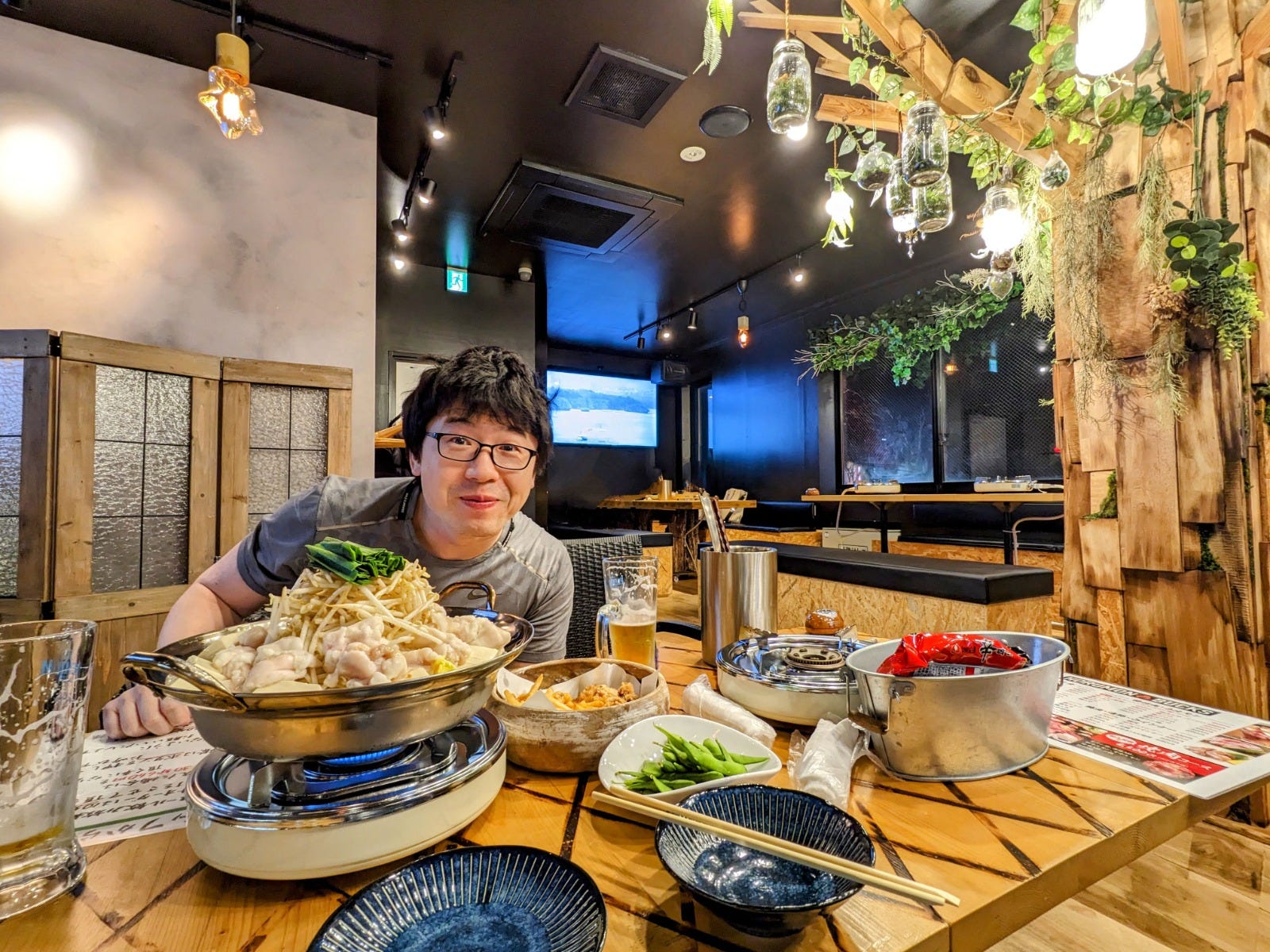
I’m Yaokai, I’m 36 and I run a tech company called Momen.
My story starts in China, where I lived until I was 13.
My dad moved to Italy when I was about three, and my mom joined him five years later.
I stayed behind with a host family until I was old enough to join them. It’s been nearly 20 years since I left China.
My parents were entrepreneurs from the start. They met in University in 1985. And then my dad went to Italy in 1992.
My dad worked in a factory there for two years without pay—completely illegal—but eventually built a trading company importing everyday goods from China.
Watching him hustle and build something from scratch made a deep impression on me. I grew up believing that entrepreneurship was the path.
I never saw myself working for someone else long-term.
I ended up in the U.S. for grad school after University at Cambridge. I joined a company called Medallia just before they raised funding and then eventually went public, after which I left to start my own ventures.
I was good at math and computers, but I wasn’t the type to bury myself in books. I got by with decent grades and a lot of wandering.
After graduation, I settled in San Francisco. It’s a startup hub, though I’ll admit I haven’t always tapped into its full potential.
Between 2015 and 2018, I built side projects while working full-time. I realized a lot of my coding was repetitive.
Around that time, I got into Bitcoin—sold miners on Amazon, dabbled in stock investing, and started exploring finance more deeply.
That led me to build things like a self-checkout system using RFID and NFC, as well as a no-code stock trading strategy backtest platform.
They all failed. For the self-checkout system, I was targeting Costco / Home Depot, but I didn’t have the connections to make that work. In hindsight, I should’ve focused on smaller businesses.
Mom-and-pop shops would’ve probably said yes without hesitation.
The backtest platform was driven by my obsession with investing. I believed in value investing and wanted to test which metrics actually worked over time. I wasn’t targeting banks with my backtest software—I was aiming for family offices and investment advisors.
But I never talked to real investment advisors, and that disconnect led to my biggest early failure.
Reflecting on my experience of building side projects, I realized that I was really frustrated with the constant need to write CRUD code, deal with API integrations, and handle CSS. I thought to myself: “There has to be a better way to do this.” That’s how Momen was born.
So I started Momen in 2020, a no-code full-stack app development platform.
With Momen, I’ve taken a different approach. I talk to my users. I listen. And that’s made all the difference.
They share their wins with me, and I get to see how the tools we’ve built are helping them.
The journey kicked off as a no-code WeChat mini program builder, and we partnered with a major platform to get things rolling. In just two years, we managed to attract over 130,000 users and launched around 3,000 projects.
By 2022, we decided to expand our reach to the web, and now we’re serving users all around the globe, powered by AWS (Amazon Web Services).
Also around this time, the company was juggling self-service tools and custom projects for other companies. It got messy. Resources were spread thin. Head count was expanding disproportionately to revenue.
So mid-2023, I made a big shift: fully self-service, no outsourcing, no free tech support. That decision brought in steady revenue and a loyal user base.
Today, we’ve got a team of 32 and around 350,000 registered users.
Of course, development isn’t cheap. I’ve got 16 developers in China, and they cost anywhere from $2,500 to $7,000 a month each. It adds up quickly. I’ve bootstrapped everything, which comes with its own set of challenges.
One of the most interesting pivots has been using WeChat Mini-Apps.
They’ve let me bypass some of the limitations of app stores like Apple’s. Even though WeChat restricts virtual goods, their early openness to mini-programs gave developers a lot of room to innovate.
That friction between WeChat and Apple is fascinating, especially since Apple doesn’t want to lose ground in China by banning WeChat.
I know a Momen client who runs a WeChat mini-program solo and pulls in nearly a million dollars a year with a trading cards business.
He’s a fund manager by day and handles everything—inventory, shipping, APIs—on his own. He even livestreams to promote his business.
I remember watching one of his streams when a feature broke mid-demo. He fixed it live, and everyone thought he was a coding wizard. Truth is, he was just figuring it out on the fly using our platform!
That kind of scrappy energy resonates with me. At Momen, we’ve seen users build their own applications on top of our platform. It’s a testament to how flexible and scalable the system is.
Living in the U.S. while managing a team in China means I’m constantly navigating cultural differences and time zones.
Remote work has its quirks, and China’s regulatory shifts have been tough to keep up with.
But I’m committed. This journey has changed me, let’s see where it goes next.
If you want to talk about AI with Yaokai, you can find him on LinkedIn.
If you have not done it yet:
Read my thoughts on Linkedin (+8600 followers) or join my Whatsapp group (+300 members)